Sustainable Water Systems
Water Usage
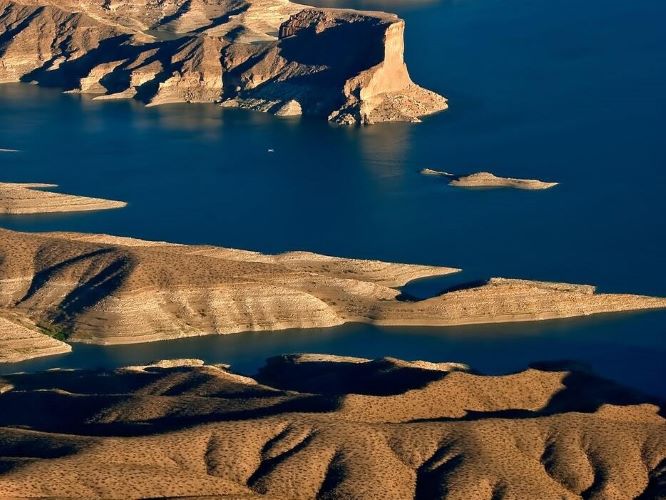
Our New NormalWater is a precious resource that our region cannot afford to waste. Research suggests that Southern Nevada will continue to experience more intense and longer drought conditions fueled by climate change, which has a direct impact on our water supply. Fueled by drought and a reduction in snowpack within the Colorado River Basin, Lake Mead’s water level has declined by more than 150 feet since the early 2000s. Drought also worsens water quality issues due to higher concentrations of nutrients and contaminants in the water, which has implications for water treatment systems and the health of natural ecosystems. |
Measuring Water UsageWater levels in Lake Mead have been an area of concern in the region for many years. While the situation poses many challenges, we have been very successful in using our water resources more efficiently. From 2002 to 2024, we've reduced consumptive usage rates by 36% even though the population increased by 55% over the same period. Across the portfolio of conservation programs from SNWA and partner agencies, eliminating water waste has prevented a significantly worse situation and these programs are poised to deliver even more use reductions in the future. |
Water Savings
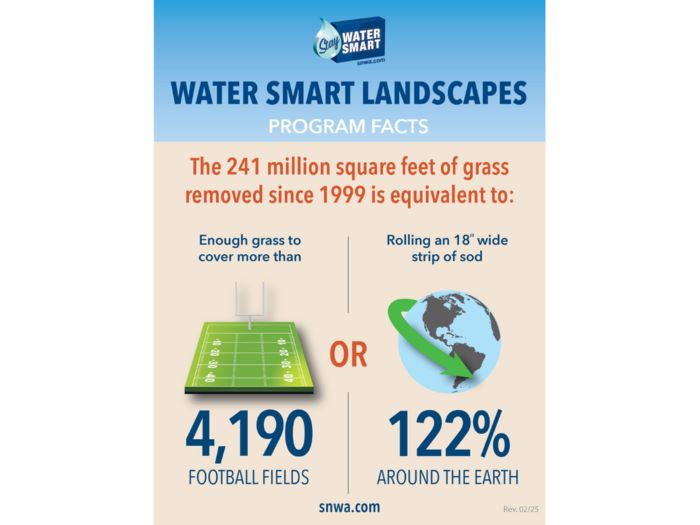
Water Smart LandscapesSNWA's Water Smart Landscapes program offers rebates to residential properties, businesses, HOAs, and multifamily properties for grass removed and replaced with desert landscaping. Since its launch in 1999 through the end of 2024, the program has helped complete nearly 90,000 projects and awarded over 365 million dollars in rebates to participants throughout the community. |
Leading By Example
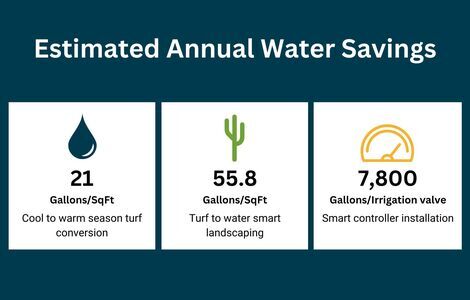
Reducing Consumptive UseBetween 1999 and 2024, 239 million square feet of turf were converted to water smart landscapes. In 2024 alone, 15.3 million square feet of lawn were converted to water smart landscapes by residents and businesses in Clark County through SNWA's rebate program. This translates to roughly 534 million gallons of water saved annually-- enough to fill an Olympic-sized swimming pool about 800 times. |
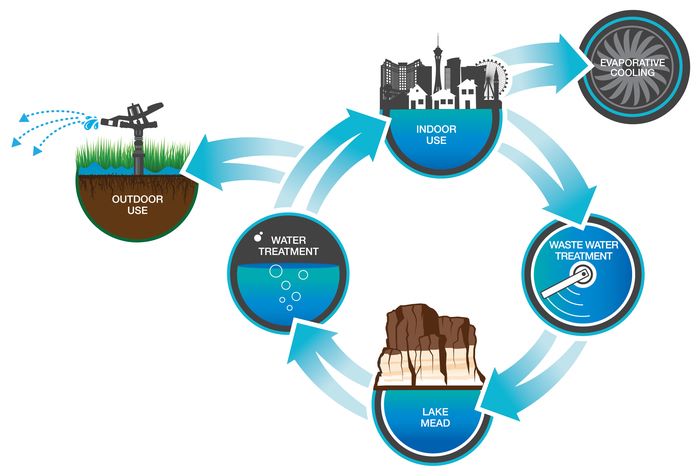
Preparing for Increased DemandThe SNWA anticipates water demand may increase from 2018 to 2035 by 10 GPCD due to climate change and service system age. Reducing consumptive water use-- water that is evaporated and cannot be captured or recycled back into the local water cycle-- will be critical to meeting the County's 2035 conservation goal and ensuring sufficient water supplies for essential needs in the years ahead. |
 |
Emissions Co-BenefitsNot only does reducing water usage preserve the natural resource, but it also reduces demand on the water treatment and distribution systems. The water saved through SNWA's conservation programs also avoided more than 30,700 MTCO2e that would been emitted through pumping and treatment processes in 2023. |
Next Steps for a Sustainable Water System
Explore the goals, strategies, and actions in the All-In Community Plan. Use the dropdown table to see the progress we've made towards implementing each action!
Sustainable Water Systems
Goal 1: Water supply is high quality and sustainable
Strategy 1.1:
| Action | Description | Status |
| 1.1.A | Transition all public property to drought-resilient landscaping. | |
| 1.1.B | Establish an efficiency review policy and process for new, large water users that encourages efficient development and disincentivizes consumptive uses. | |
|
1.1.C |
Expand existing guidebooks and training on incorporating drought tolerant green infrastructure onto existing properties. |
| Action | Description | Status |
|
1.2.A |
Transition all public property to drought-resilient landscaping. |
|
|
1.2.B |
Establish an efficiency review policy and process for new, large water users that encourages efficient development and disincentivizes consumptive uses. |
|
|
1.2.C |
Expand existing guidebooks and training on incorporating drought tolerant green infrastructure onto existing properties. |
Goal 2:
Strategy 2.1:
| Action | Description | Status |
| 2.1.A | Develop a program to transition industrial and commercial customers to efficient, dry cooling technologies. | |
| 2.1.B | Develop a program to transition industrial and commercial customers to efficient, dry cooling technologies. |
Strategy 2.2:
| Action | Description | Status |
| 2.2.A | Develop and implement uniform regional performance standards to help local jurisdictions evaluate water demands of planned development. | |
|
2.2.B |
Develop tools and guidance for developers to estimate water demand of proposed projects and report results to local jurisdictions. |
Strategy 2.3:
| Action | Description | Status |
| 2.3.A | Train and incentivize building tradespeople to identify and repair water leaks. | |
|
2.3.B |
Identify barriers to and implement solutions for participation in SNWA’s commercial and industrial Water Efficient Technologies program. |
Goal 3:
Strategy 3.1:
| Action | Description | Status |
| 3.1.A | Align all jurisdictions’ water policies and programs with existing studies and water resource plans. | |
| 3.1.B | Ensure power grid redundancy for water and wastewater transmission systems. |
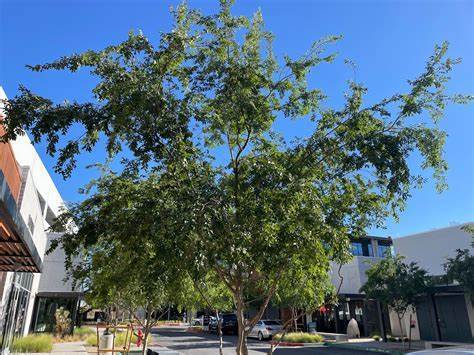
Preserving and ConservingThe Southern Nevada Water Authority is working towards providing sufficient water to the community while promoting conservation and heat mitigation. In 2023, they launched the Tree Enhancement Program, which offers a "treebate" of $100 per tree to residential and commercial participants who install trees as part of their Water Smart Landscape (WSL) conversion project. Between August 2023 and August 2025, the SNWA has supported nearly 7,000 new tree installations through the incentive, representing nearly 3 million square feet of new tree canopy! |
 |